
- MN ABE Connect
- Archive
- Good Sub Plans: The Key to Efficacy and Continuity in Your Absence
 December 8, 2025
Good Sub Plans: The Key to Efficacy and Continuity in Your Absence
My nightmare as a substitute teacher is showing up to class with no idea what is going on. I am sure many of you who have subbed as a side hustle or filled in for a sick coworker or friend can relate.
You show up early to the class to find a very loose plan about some topic you are totally unprepared to teach without adequate time to figure out the answers to the questions on the worksheet or get a basic working knowledge of the topic. You begin to panic and rethink your decision to become a teacher, hoping the students don’t come today, since their teacher warned them there would be a sub. You remind yourself how grateful you are that in adult education, classroom management isn’t an additional impediment, while simultaneously realizing this is not an absolute truth. You cram for the next fifteen minutes, trying to remember or relearn some vaguely familiar event in history or some arcane grammar point. The students arrive. You all muddle through, reminding yourself that andragogy focuses on student-directed experiential learning, so this collaborative muddle isn’t likely to destroy the continuity of the students’ education or undermine their trust in the system or their teacher.
Why create sub plans?
Sub plans can seem like an unnecessarily burdensome task, taking almost as much time to prepare as actually teaching the lesson yourself, but when you begin to place yourself in your students’ shoes, your thinking may change. Our students come to school despite hectic and challenging schedules and lives. They often sacrifice family time, overtime pay, and sleep for the opportunity to continue their educational pursuit. They trust us to use their precious time efficiently.
As a teacher, I do not have a written, detailed lesson plan for every day of instruction, but overarching goals are always in place. I have content goals—as well as weekly and daily objectives—in mind, along with a plan to reach them. Sometimes these plans and goals are easy to articulate; more often, they are opaque. My goals and plans include not only mastery of the actual content, but also a wide range of pedagogical approaches.
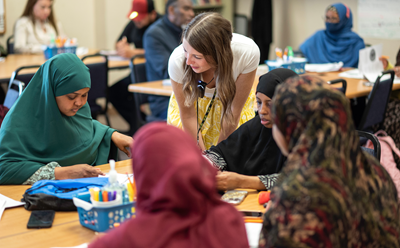 When I have a sub come to my class, I want my students to continue working toward their content mastery while also maintaining continuity across all areas, including andragogical and pedagogical approaches. I want any sub experience to add to my students’ education, not undermine the trust and relationships we have worked so hard to establish.
Key components
Some key components can make sub plans better for the sub and students. These may seem obvious, but simplifying and clarifying things can really improve the experience for both the substitute teacher and the students and can provide continuity of instruction.
Logistics
- the building address and a link to a map
- room number(s)
- directions for entering the building or the location of a dedicated entrance
- all links to the virtual meeting space if the class is online or hybrid (plus, invite the sub to the meeting space through the calendar or allow access)
- the amount of prep time the sub will be paid for
- the length of the class
- dates of the classes they will be subbing for
- names and roles of assistants or volunteers
- a point of contact in case of issues or an emergency
- student names–legal and preferred–as well as any pronouns (names displayed on screen may not match the preferred name and pronouns. Repeatedly omitting these details in your sub plans can undermine students’ trust in the community of learners and affect their educational outcomes)
Materials
- copies and/or virtual materials, including slides, worksheets, video or audio links, readings, etc.
- accessible share settings (setting documents and folders to “Anyone with the link can view” can be a helpful default)
- updated links
- lesson background information–knowing the big picture/pathway is important
- definitions of key terms for continuity in meaning, connotations and relationship to the content (e.g., if I am writing a subplan for a lesson on adjectives, I would define noun and adjective as part of the plan)
- answer keys—even to easy questions—so the sub can attend to teaching and keep the class on track
Step-by-step plan
Once you have your logistics and materials in place, provide a general plan overview. This overview can be a step-by-step plan for the class with examples of questions and sample dialogue or bullet points outlining the plan. I prefer the step-by-step method as it allows almost anyone to come into my class and teach the content. It also provides language for communication to support student engagement and understanding at an appropriate level, whether that is Beginning ESL or High School Equivalency. The step-by-step plan also supports your approach; for example, if communicative competence is one of your goals, the lesson plan may include directions to have students read the directions aloud and explain their answers or to turn and talk to a partner. If you are using an online platform like Burlington English, you can print the lesson pages and the teacher lesson plan directly from the web. If you are using a slide deck, you may have slide-by-slide directions.
Some extra prep—with big returns
Preparing for a sub may seem like a lot of work. It is, at first. Once I started thinking of sub plans as a key component of my teaching practice—rather than a quick fix for being absent—I spent as much, or more, time making sub plans as I would have spent just teaching the lesson. But like all things in my teaching praxis, as I got more comfortable with preparing plans and developed a reusable template, sub plans took less time.
Getting a sub became easier because I could have almost anyone come in and follow my plan with ease and success. I have repeatedly gotten positive feedback from substitutes that students were successful and that it was easy to sub for me. Students also report that, while they are not happy about my absence, they have continued to make uninterrupted progress toward their academic goals.