
- MN ABE Connect
- Archive
- Making Change Happen: The Rider, the Elephant & the Path (Part 1)
 October 19, 2026
Making Change Happen: The Rider, the Elephant & the Path (Part 1)
Lydia Yahnke, Adult Programs CoordinatorAdult Education Administrators are full of good ideas.
We want to improve communication. We want to reach more learners; we want to reach all the learners. We want to strengthen partnerships. We want to increase attendance and improve student outcomes. We want to collect fuller student and partner feedback. We want to build programs and learning opportunities with intention, have a team to brag about, and become the go-to organization in the community and put forth a can-do reputation. We want to uplift our communities. And, we usually have many ways to make these ideas manifest.
The challenge usually isn’t a lack of ideas. The challenge is making change happen and turning those ideas into sustained action, especially when they emerge from group consensus based on student need, feedback and progress.
As Adult Education leaders, we often assume that if we explain a change clearly enough in a one hour staff meeting, staff will embrace it. When that doesn’t happen, our instinct may be to send an email reminder, mention it again in passing as you head down the hallway for the next meeting, or simply let it fall into the death pit of previously-talked-about-moments-of-genius.
But successful change requires more than information and head nods. It requires people to understand the change, believe in it, have the ability to act on it, and then consistently follow through, leading to a fruitful debrief of your team efforts.
This past summer, I vowed to live in my kindle, clawing away at my digital to-be-read list. Two books from my library helped me think about this problem in a new way: Switch: How to Change Things When Change Is Hard by Chip Heath and Dan Heath, and Traction: Get a Grip on Your Business by Gino Wickman.
Switch offers a catchy framework for understanding change through the metaphor of the Rider, the Elephant, and the Path. The Rider represents the rational side of change that needs direction; the Elephant represents the emotional side of change that needs motivation; and the Path represents the environment that can either support or hinder change.
Traction, through Wickman’s Entrepreneurial Operating System (EOS), approaches the challenge from a different angle: how organizations turn vision and priorities into consistent execution of change. Its highly-adaptable tools focus on clarity, accountability, measurement, follow-through, and assessment for any team or organizational goal.
The two books got me thinking: What if we combined the main ideas into a simple way for adult education leaders to engage in organizational change? We are asking, when it comes to change within a team, program, or organization, are we ready for change? Are we willing to change? Are we capable of change? If we can truthfully answer “Yes” to those questions, we have two follow-ups. Are we actually executing this change? Have we fully debriefed the intention of the change and the execution of the change?
This isn’t a process found in either book but the combination of their most important elements kept me up late into the night, excited to bring this to the office to try it out. It is truly an adaptation inspired by the core concepts in both works, translated into an adult education context and I invite you to imagine bringing this easy-to-implement-framework to your teams.
Note that this framework will be shared in two parts, giving you and your teams time to try stuff out before coming back for more! Let’s dive in!
Ready: Give the Rider Direction
The Rider represents the rational side of change.
The Rider wants to know: Where are we going? What steps will we take to get there? Who are the right people to make this happen?
In Adult Education, we often underestimate the importance of clarity.
A leader might say:
“We need to improve student outreach.”
That sounds reasonable. But what does it actually mean? Does it mean making more phone calls? Attending community events? Sending letters directly to employers? Creating referral partnerships? Posting more frequently on social media? Following up with inactive students?
Without clarity, everyone on your team may interpret the goal differently. We may try a plethora of strategies but all these efforts may be too unfocused to yield positive results.
The Rider needs direction. So, instead of saying “improve student outreach,” a clearer goal might be:
“By December, we will establish three new community referral partnerships and create an individualized, documented, and consistent referral process for each partner.”
Now staff have something they can understand and work toward. Clarity doesn’t mean having every detail figured out. It means people understand enough to know what success looks like and what their next step should be. Selecting a person or people to lead the change will be a good next step in order to instill further direction into your team and move forward with your meeting agenda.
Your group should be asking:
- Do staff understand what we’re trying to accomplish?
- Are we communicating priorities clearly?
- Have we defined what “done” looks like?
- Have we identified the next action and a point person?
- Have we considered all available student feedback in setting this goal?
Before asking staff to change, make sure the Rider (the rational side of change) knows where to go.
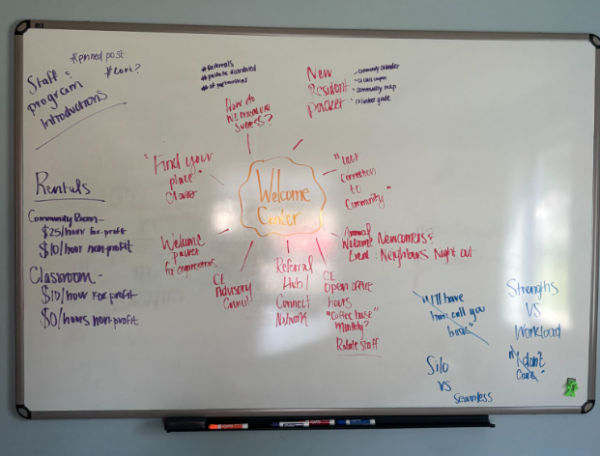
Pro tip: Mind-maps can be a powerful tool for creating clarity and providing a visual. Whenever you have the opportunity to build one with your team, do it. After you’re done working on the mind-map for the day, take a picture and share it out with your team for reference.
Willing: Engage the Elephant
The Elephant represents the emotional side of change. And this is where leadership gets more complicated.
People can understand exactly what you want them to do and still not do it.
Why? Because understanding something doesn’t necessarily mean caring about it.
The Elephant asks: Why does this matter? Why should I invest my time and energy in this?
Consider a staff member who is asked to complete a new weekly student progress report or implement lesson exit tickets at the end of class.
You could explain the form perfectly. Everyone could understand the instructions and agree to the importance of these efforts.
But if staff see it as “one more thing the administration wants,” or “we’ll never revisit this data anyways” or “that’s not my style” the change may never gain traction or it might fall to the wayside or get shoved to the backburner during class or an interaction with a student.
What if the conversation instead becomes:
“This feedback and assessment data helps us see where learners are making progress, where they’re getting stuck, and where our program needs to respond. Students have identified that they prefer to offer written feedback. For us, that now means implementing weekly student progress reports and lesson exit tickets at the end of class because that best meets the needs of our students and allows them to find agency in the program. Martin will create these electronic and printed forms by October 1 for your use. We will debrief the data and our efforts at the final staff meeting of the school year. Chelsea will lead us in analyzing the weekly student progress report. Robbie will lead us in analyzing the lesson exit tickets and all teachers will provide context to each of their students and next steps. The results will become our goals in the new year, to be implemented when we return from winter break.”
The task hasn’t changed. The meaning has. And, accountability becomes the expectation for all staff. Their efforts will contribute to the betterment of the students in a way that works for them.
Adult Education is mission-driven work. Our staff need to understand not just what we’re doing, but why it matters, and what each person is going to do about it and do it in a way that works for our students. Much like our students need to know why we ask for 40 hours of classroom time before they retest or why we ask them to log distance learning hours outside of class as it relates to funding and keeping our programs free-of-charge.
Motivation also comes from ownership. People are more likely to support a change when they have an opportunity to contribute to it.
Instead of announcing:
“Here’s the new process.”
Try asking:
“Here’s the problem we’re trying to solve. What would make this process work for you and for our learners?” “What can each of us contribute to this problem we’re trying to solve?”
That small shift can turn compliance into active participation and engagement.
Your group should be asking:
- Do people understand why this change matters?
- Have we connected the change to our mission?
- Have we acknowledged what might be difficult about it?
- Have people had an opportunity to contribute?
- Does the change feel like something we’re doing with people rather than to them?
- Have we consulted our students about the problem?
The Elephant doesn’t need another standstill explanation. It needs a reason to move.
Pro tip: set the expectation among staff that there is no option to “opt-out” or disengage from this process. Staff can disagree in how to solve a problem but they cannot remove themselves from the efforts that may positively impact students. “I don’t care” and “Doesn’t matter to me” is no longer part of your staff’s vernacular!
Capable: Shape the Path
This may be the most overlooked part of organizational change. It’s important to acknowledge that sometimes the problem isn’t the person or the team members. It’s the path. It’s the environment or the structure that we have built together that impedes our efforts.
We often try to motivate staff to overcome systems that we’ve made unnecessarily difficult. We want staff to communicate more, but there isn’t a unified communication process. We want partners to refer students, but the referral form is complicated. We want staff to participate in meetings, but meetings don’t create meaningful opportunities for participation or support or follow-thru. We want staff to complete weekly updates, but the process takes thirty minutes and requires information they have to find in three different places.
When change isn’t happening, leaders often ask:
“How do we get people to do this?”
A better question might be:
“What is making this difficult to do?”
Shaping the Path means designing or redesigning the environment so the desired behavior becomes easier, safer, and more intentional.
If we want more staff participation, perhaps every meeting includes one question that each person has an opportunity to answer or every person has a number that they pull from the data for group reflection.
If we want better communication, perhaps we create one simple weekly update rather than relying on information being shared in several different places or in infrequent conversations among staff members.
If we want more student referrals, perhaps we create a one-minute referral process or we offer introductory presentations to our partners and register students on site.
Good organizational design reduces the amount of willpower required to do the right thing. Make the environment so easy to navigate that it becomes hard for participants to find an excuse to turn away.
Your group should be asking:
- Have we made the desired behavior easy to implement?
- Where and what are the unnecessary steps we’ve built for staff? How do we remove them?
- What student barriers are built into our current system? How do we remove them?
- Are we relying on people to remember something that could be built into a routine?
- Could we redesign our process instead of asking people to try harder?
Sometimes the fastest way to change behavior is to change the environment around the behavior.
Pro-tip: conduct an ease-of-execution audit. Choose one behavior your team struggles to execute. It could be something as simple as navigating your team’s google drive. Have someone unfamiliar with the process walk through it while the rest of the group observes. Don’t explain or defend the process. Just watch where they hesitate, ask questions, backtrack, or get stuck.
Take time to digest the main elements in Making Change Happen: The Rider, The Elephant & The Path with your teams. Then, come back for part two of this article!

Lydia Yahnke, Adult Programs Coordinator
Owatonna Adult Education
Newsletter Signup
Get MN ABE Connect—the official source for ABE events, activities, and resources!
Sign UpArticle Categories
- ABE Foundations/Staff Onboarding
- ACES/Transitions
- Adult Career Pathways
- Assessment
- CCR Standards
- Citizenship
- COVID-19
- Cultural Competency
- Digital Literacy/Northstar
- Disabilities
- Distance Learning/Education
- ELA
- Equity/Inclusion
- ESL
- HSE/Adult Diploma
- Listening
- Math/Numeracy
- Mental Health
- Minnesota ABE
- One-Room Schoolhouse/Multilevel
- Professional Development
- Program Management
- Reading
- Remote Instruction
- Science
- Social Studies
- Speaking/Conversation
- Support Services
- Teaching Strategies
- Technology
- Uncategorized
- Volunteers/Tutors
- Writing