- MN ABE Connect
- Archive
- Collective Joy: Leveraging Students’ Collectivist Mindset as a Classroom Asset
 March 23, 2026
Collective Joy: Leveraging Students’ Collectivist Mindset as a Classroom Asset
“We are taking care of each other. We all take responsibility in this classroom.”
— Andrea E.
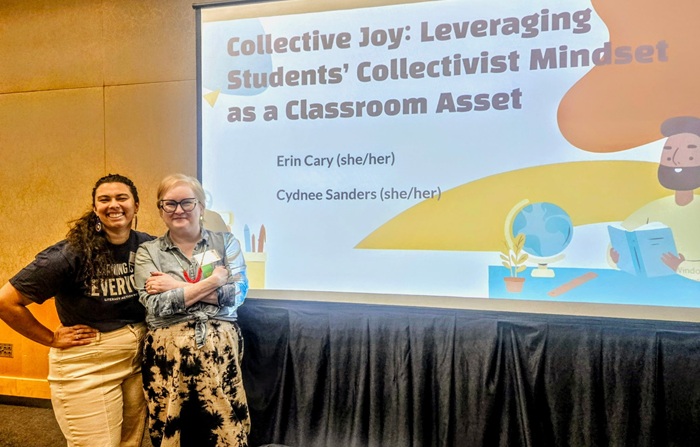
This powerful reflection captures the heart of a recent session at MELED 2025: Collective Joy: Leveraging Students’ Collectivist Mindset as a Classroom Asset, presented by Erin Cary and Cydnee Sanders. A brief overview of the presentation—along with the accompanying slides—has now been added to the ATLAS ESL Library for programs across Minnesota to explore and implement.
This new resource helps educators move beyond traditional Western individualistic expectations and instead recognize the deeply rooted collectivist strengths many of our multilingual learners bring into the classroom. For adult learners, especially those in community- and family-centered cultures, collaboration, mutual care, and shared responsibility are not just helpful—they are inherent ways of being.
Why This Matters for Adult Education
The presenters asked a simple but transformative question:
“How can I get out of the way of my learners?”
Through discussion and examples, they encouraged educators to shift from deficit-based assumptions (What skills do students lack?) to asset-based inquiry (What culturally derived strengths do learners already have that support learning?). This aligns with culturally responsive frameworks, including the work of Zaretta Hammond, whose research emphasizes leveraging cultural behaviors, community ties, and relational learning to deepen engagement and understanding.
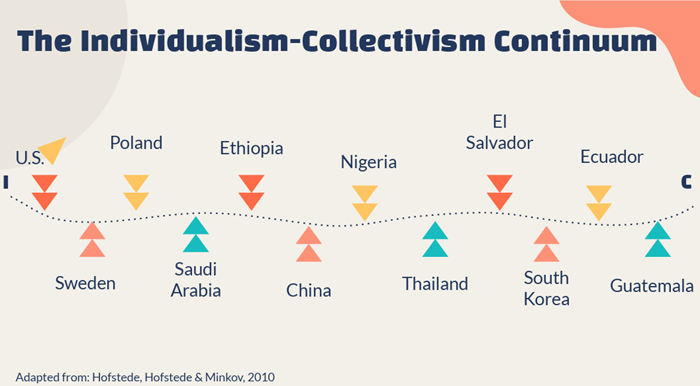
Teachers were encouraged to notice and elevate the ways students:
- Care for one another
- Meet the needs of peers
- Share responsibility for classroom success
- Bring social-emotional strengths shaped by their cultures and experiences
Rather than redirecting these behaviors into individual tasks, this approach embraces them as powerful learning assets.
Frameworks & Inspiration
The session drew heavily on Muhammad’s 5 Pursuits, a framework from Gholdy Muhammad that centers culture, purpose, and humanity in curriculum design. The Five Pursuits include:
- Identity
- Skills
- Intellect
- Criticality
- Joy
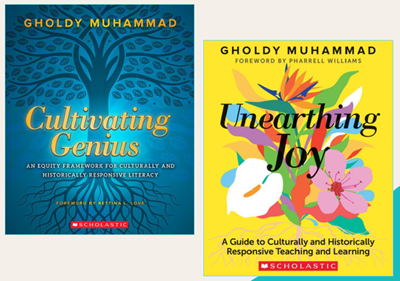 These pursuits encourage educators to create learning environments where adult students feel seen, affirmed, and connected—and where joy is considered an essential part of pedagogy, not an “extra.”
Sanders and Cary recommended Cultivating Genius and Unearthing Joy, both by Gholdy Muhammad, which offer further insight. Though these titles are rooted in K–12 contexts, their principles translate meaningfully into adult ESL and ABE classrooms.
A Practical Takeaway: Building Collective Joy in Daily Routines
Participants highlighted simple routines that help cultivate collective learning environments. One example:
Level 1–2 Check-Out Routine
Learners finish class by completing two sentence frames:
- “Today I liked ___.”
- “Today I remember ___.”
This structure reinforces recall, builds confidence, and allows learners to share their learning aloud—building both language skills and group cohesion. Over time, routines like this strengthen the classroom community while honoring collectivist ways of learning.
Explore the Full Resource
A brief overview and slide deck from the session—Collective Joy: Leveraging Students’ Collectivist Mindset as a Classroom Asset—are now available in the ATLAS ESL library. These materials offer strategies, examples, and reflective prompts to help Minnesota Adult Education teachers harness the cultural strengths their students bring to learning.
We hope this resource supports you in creating spaces where identity, connection, and joy are not only present—but central to the learning experience. Please reach out with any questions or ideas for implementing these approaches in your own classroom.