- MN ABE Connect
- Archive
- Meeting Learners Where They Work: Getting Started with Workplace Literacy
 January 19, 2026
Meeting Learners Where They Work: Getting Started with Workplace Literacy
Carly Voshell, ACP & Transitions CoordinatorWhat Is Workplace Literacy?
You’ve probably heard the term workplace literacy, but what does it mean? Federally, workplace literacy is defined as:
“adult education and literacy activities offered by an eligible provider in collaboration with an employer or employee organization, at a workplace or an offsite location, that are designed to improve the productivity of the workforce.”
Workplace literacy instruction may take place at a job site or another location and is sometimes referred to as Workplace Adult Education or Workplace Education.
In workplace literacy programs, participants typically do not have the traditional ABE goals of earning a high school equivalency or increasing standardized reading or math levels. Instead, ABE programs partner with employers to develop meaningful milestones that are directly tied to the specific job or industry. These milestones focus on building skills that support both employee success and workplace needs.
What Do Workplace Literacy Milestones Look Like?
Below is an example from the NRS MSG Selector Tool:
In a food processing plant, workplace literacy instruction was provided to increase worker productivity and opportunities for advancement. Milestones established with the employer included:
- Improving English proficiency using job-related vocabulary and oral communication
Measured by a standardized English assessment and the employer’s progress report - Improving written and oral communication skills during in-services and required plant trainings
Measured by the employer’s progress report - Improving the ability to read all plant safety protocols and communicate their meaning
Measured by the employer’s progress report
Workplace Literacy Programs in Minnesota
If you’re looking for examples of how workplace literacy programs are being implemented across Minnesota, watch the recording from a December webinar called Getting Started with Workplace Literacy to hear from experienced ABE practitioners sharing their approaches and lessons learned. Featured presenters include:
- Lydia Yanke, Owatonna ABE, with employer partners Lakeside Foods, Quanex, Viracon, and Best Boy Farms
- Susan Edmondson, Burnsville ABE, who has a long-standing partnership with Gertens Garden Center
- Karen Wolters and Jennifer Johnson, Mankato ABE, along with members of their team and an employer representative from Taylor Corporation
How Do You Get Started with Workplace Literacy?
Employer engagement is the essential first step in developing a workplace literacy program—and often the most challenging. Strategies for making initial connections may include participating in your local Workforce Development Board, attending job fairs, or collaborating with College or Career and Technical Education (CTE) contacts at your school district or community college.
For additional ideas, check out the 2024 article 5 Free Ways to Stay Connected with Employers and Strengthen Collaborations.
Introducing the Employer Engagement Toolkit
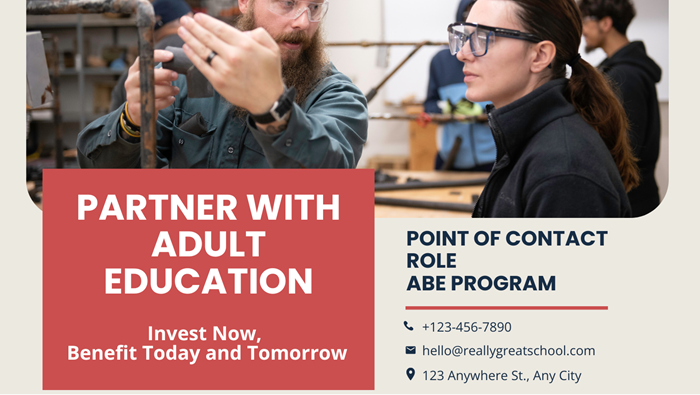
The Employer Engagement Toolkit provides customizable flyers that highlight the short- and long-term return on investment (ROI) possible through collaborations between employers and ABE programs.
Each flyer can be tailored with your program’s contact information, logo, and preferred wording. The toolkit offers ready-to-use materials designed to help programs initiate conversations with employers and build stronger employer partnerships.
Carly Voshell, ACP & Transitions Coordinator
ATLAS
Newsletter Signup
Get MN ABE Connect—the official source for ABE events, activities, and resources!
Sign UpArticle Categories
- ABE Foundations/Staff Onboarding
- ACES/Transitions
- Adult Career Pathways
- Assessment
- CCR Standards
- Citizenship
- COVID-19
- Cultural Competency
- Digital Literacy/Northstar
- Disabilities
- Distance Learning/Education
- ELA
- Equity/Inclusion
- ESL
- HSE/Adult Diploma
- Listening
- Math/Numeracy
- Mental Health
- Minnesota ABE
- One-Room Schoolhouse/Multilevel
- Professional Development
- Program Management
- Reading
- Remote Instruction
- Science
- Social Studies
- Speaking/Conversation
- Support Services
- Teaching Strategies
- Technology
- Uncategorized
- Volunteers/Tutors
- Writing